
By clicking on ACCEPT, you consent to the use of cookies on our website.
For more details, see our privacy policy.

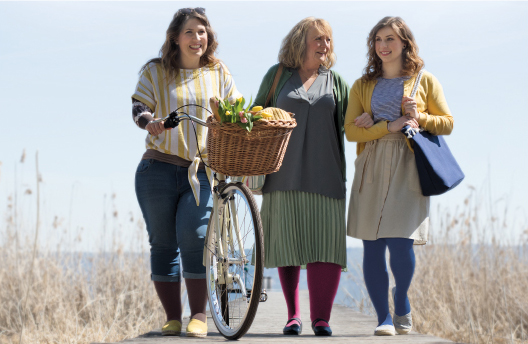
Do what you love. Do it in good health.
Venous disease (poor blood circulation), lymphedema and lipedema can limit mobility and cause discomfort, but that does not mean you cannot enjoy doing what you love. Therapeutic compression allows you to continue working, playing, travelling and living comfortably. Its benefits also promote better health.
Choosing the correct compression garment is essential for your health and well-being. Over-the-counter (OTC) or consumer compression garments are not the same as medical (RX) compression garments.

Non-medical or athletic compression garments may help your legs feel better, but if you have a circulatory or lymphatic medical condition, it could be dangerous to wear them. Why? OTC or athletic compression products may not be the appropriate dosage, size, option or containment for your health condition. Those garments do not have the structure of a medical-grade compression garment — designed to aid in the circulation of your blood and lymph. Most OTC or athletic compression products work for healthy people to assist in recovery from sports or casual activities. Depending on the shape of your limb and the severity of your condition, only a medical compression garment will provide the therapeutic benefit necessary to help manage your condition.
Medical compression offers certain features that aid in managing your medical issues and can help improve health outcomes.
Your doctor will prescribe your proper compression dosage (mmHg) and include product instructions on your RX script. Make sure your garment matches this.

What does the structure of a medical compression garment mean?
The delivery of pressure and the stiffness of the garment is known as the structure. The garment’s performance depends on the material and how it is knitted. For example, higher-containing garments use kitting techniques that make the product denser and less elastic to provide a high level of stiffness, which means more containment.
The key to controlling graduated compression (or the dosage prescribed) is an additional inlay thread knitted into the garment. Picking the appropriate one depends on multiple variables — a medical professional and certified compression fitter should always assist you in making this decision.
In conclusion, medical compression garments are very different from OTC stockings due to the garment structure. You may find an inexpensive OTC garment that looks the same as a Juzo garment — similar fabric and colour — but it may not provide the same level of stiffness or correct dosage, so it is ineffective for someone with lymphedema or venous disease. Read an article in the Vein Specialist newsletter from the American Venous Forum to learn more about medical compression compared to OTC support compression.
When a doctor prescribes any medication, they always include a dosage amount on the RX script — you know how much to take and how often, right? Medical compression also has a dosage amount that varies from mild (15-20 mmHG) to moderate (20-30 mmHg), firm (30-40 mmHg), to strong (40-50 mmHG). You must wear a compression garment with the appropriate amount of compression prescribed.
Medical compression products have graduated compression; this means 100 percent of the pressure starts at the ankle or wrist and decreases as it moves up the limb.
Options for compression garments as style, size, length and material, also maximize therapeutic effectiveness. If you have lymphedema or edema (swelling), you may need a thigh-high or pantyhose style to compress areas from your foot to the abdomen.
Most OTC or athletic compression products are typically only available in knee-high styles, sized by shoe and offer limited sizes and lengths.
Review the tables below to learn more about how to pick the correct medical compression garment.


DEC. 24 – OPEN 9-4PM
DEC. 25 – CLOSED
DEC. 26 – OPEN 9-5PM
DEC. 31 – OPEN 9-4PM
JAN. 1 – CLOSED
DEC. 24 – OPEN 9-4PM
DEC. 25 – CLOSED
DEC. 26 – CLOSED
DEC. 31 – OPEN 9-4PM
JAN 1. – CLOSED